Although the Montgolfier brothers built the first balloon in 1783 in Annonay, the very technology of using heated air to rise dates much further back — to ancient China, where it appeared in the form of so-called sky lanterns.
The French brothers managed to adapt and refine this seemingly simple principle, ultimately applying it on a much larger scale to create the first mode of air transport in human history.
Hot air balloons may no longer hold many secrets for us, yet what seems like a simple flight is made up of many small and precise elements. It also requires extensive knowledge and careful preparation.
Why does hot air lift the balloon?
Let’s start with a quick physics lesson. The principle behind it is quite simple. It all comes down to buoyancy and density.
Warm air rises through cooler air because it’s simply lighter — it has a lower mass per unit of volume. Lower density means there are fewer air molecules within the same space, which move more rapidly.
This difference in density between warm and cool air creates a buoyant force. In practice, the cooler, heavier air “pushes” the warmer air upward — much like water displaces an object that is lighter than itself.

Main parts and components
At first glance, it all seems straightforward. There are three main parts, each designed with specific engineering solutions to ensure safety, control, and functionality.
1. Envelope
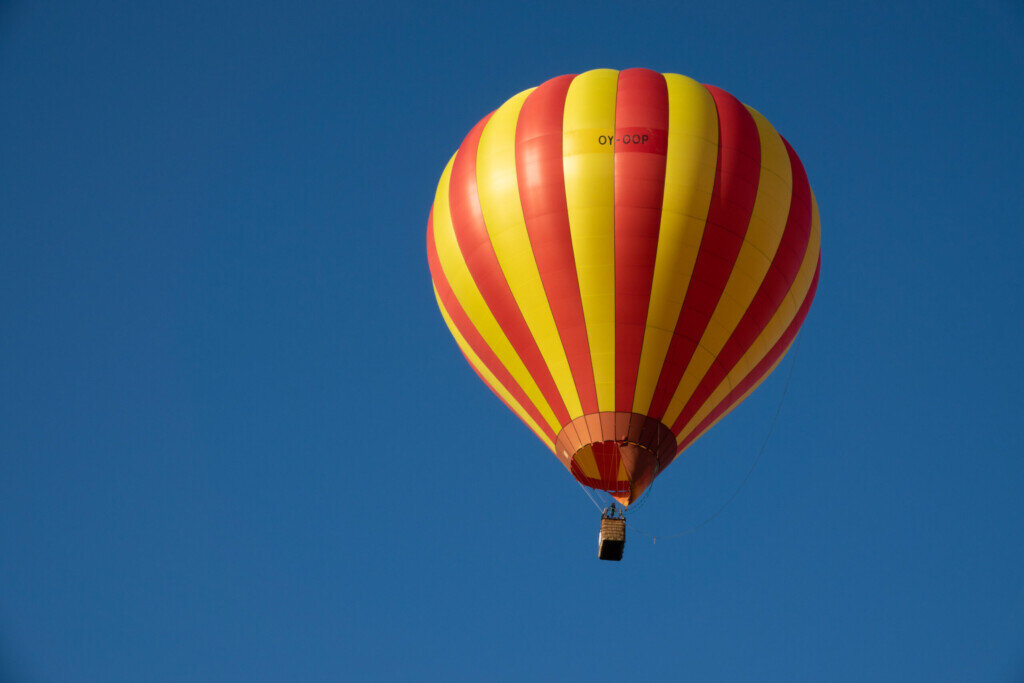
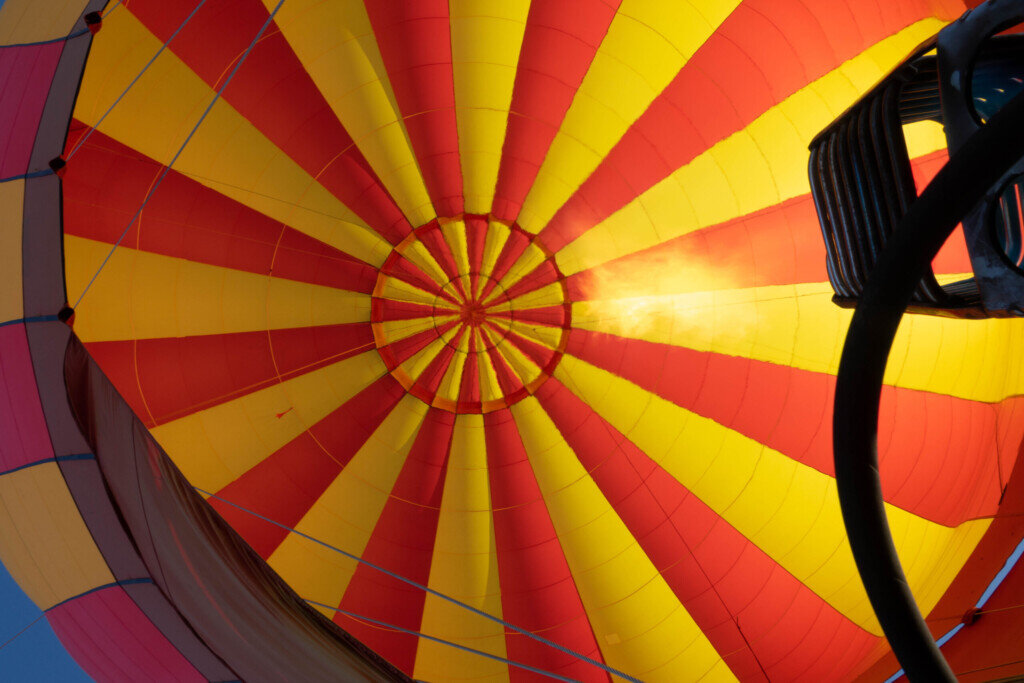
This is the large fabric “balloon” (also called the envelope) that holds the heated air and gives the entire structure its shape. It’s made of highly durable synthetic materials — including polyester, ripstop, hyperlast, and a small amount of Nomex (the same material used in firefighter suits) — resistant to high temperatures and designed to protect the balloon from mechanical damage. Although from a distance it looks like one large piece of fabric, it’s actually much more complex than it appears at first glance:
- Gores: These are the vertical panels of fabric that make up the main part of the balloon’s envelope. They are sewn together in a way that creates a rounded shape tapering towards the bottom, helping the balloon maintain its structure and ensuring stability during flight.
- Skirt: This is the lower part of the envelope, located near the pilot’s position and the burner. It is made of Nomex to provide better protection against high temperatures and flames.
- Load tapes: These are reinforced straps, usually made of polyester, sewn into the envelope. Their role is to evenly distribute the load throughout the entire structure by transferring it to the load frame via steel cables, ensuring the balloon’s stability and safety in flight.
- Rotation vents: These are two vertical openings located at opposite sides of the widest part of the envelope. They provide better control over the balloon’s rotation and enhance flight stability, especially in strong winds. They also help prevent or limit unwanted spinning during the flight.
- Deflation systems: Balloons of different types and sizes use various venting systems that allow gradual air release during flight or rapid deflation, which is particularly useful after landing. At the very top of the envelope, there’s a large opening supported by a fine mesh made of load tapes. From the inside, this opening is covered with a loose piece of fabric and cords, making the structure somewhat resemble a parachute. Under the internal air pressure, the vent remains tightly sealed during flight. The pilot can open the vent from the basket by pulling a cord (usually red), and once released, the flap closes automatically, returning to its original position.
2. Burner system
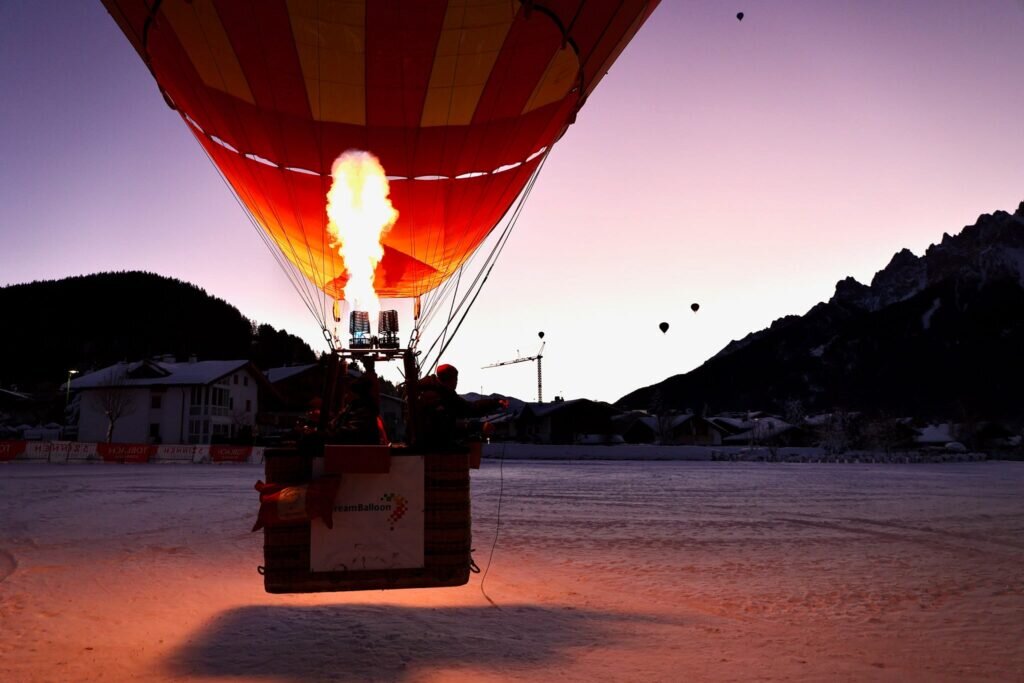
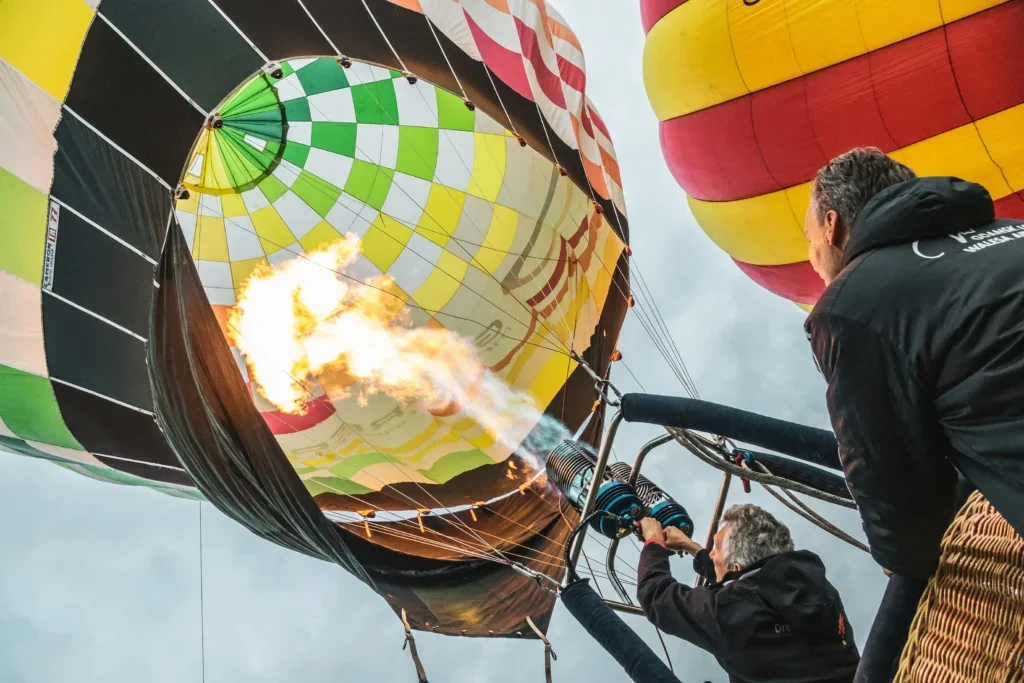
The entire system consists of the burner and the support frame with propane cylinders. The burner heats the air inside the balloon’s envelope by burning propane, generating lift that allows the balloon to rise. This is the basic version of such systems, but in more advanced balloon models, it can be significantly more complex.
- Burner: The burner is responsible for heating the air inside the balloon’s envelope to generate lift. The flame and burner intensity can be adjusted, allowing the pilot to control the balloon’s altitude during the flight. Newer balloon models sometimes use multiple burner systems, which improve performance, efficiency, and provide greater control.
- Propane cylinders: These are simply high-pressure tanks that store propane. They are usually made of steel or aluminium and securely attached to the support frame. The propane flows through pressure-regulated hoses to the burner, providing the energy needed to sustain the flame throughout the flight. The number of cylinders depends on the balloon’s size and the duration of the flight.
- Support frame: The support frame is a structural component that holds the burners and propane cylinders in the basket. It is made from lightweight yet durable materials such as aluminium or stainless steel. The frame also helps distribute weight evenly and absorb forces acting on the balloon during flight. It provides stability to the burners and the entire fuel system.
3. Basket
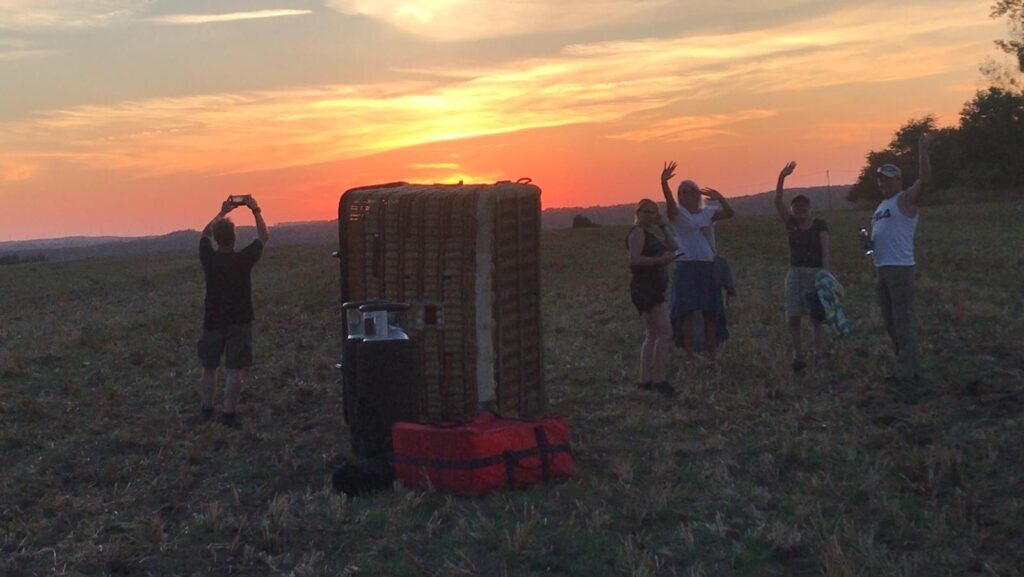
The balloon basket (or gondola) is woven from willow wicker, a material known for being both lightweight and durable. The only exception is small sport balloons, where alternative materials are sometimes used.
The floor and base are often made from waterproof plywood reinforced with wooden rails, and the edges are covered with leather for added protection. The basket itself is attached to the load frame using stainless steel cables.
- Open baskets: These are the classic, simple wicker or rattan baskets. As the name suggests, they don’t have any internal partitions.
- Partitioned baskets: These have internal dividers that create separate spaces for the pilot and passengers. There are various types of these baskets, for example with T-shaped or Y-shaped partitions.
- Sport baskets: These are designed for competitive ballooning or fast flights. They are typically smaller and lighter, providing better manoeuvrability and performance.
Fun fact: Cameron Balloons has developed the first prototypes using synthetic wicker, and early tests look promising. For now, however, there are no plans to implement this solution on a larger scale — obtaining the necessary certifications is a long and complex process.
Balloon flight – Step by step
It’s a wonderful experience, but it does require some effort. Preparing a balloon for flight is quite an undertaking in itself.
Each stage comes with its own specific challenges. Here’s what it looks like in practice:
1. Choosing the launch site:
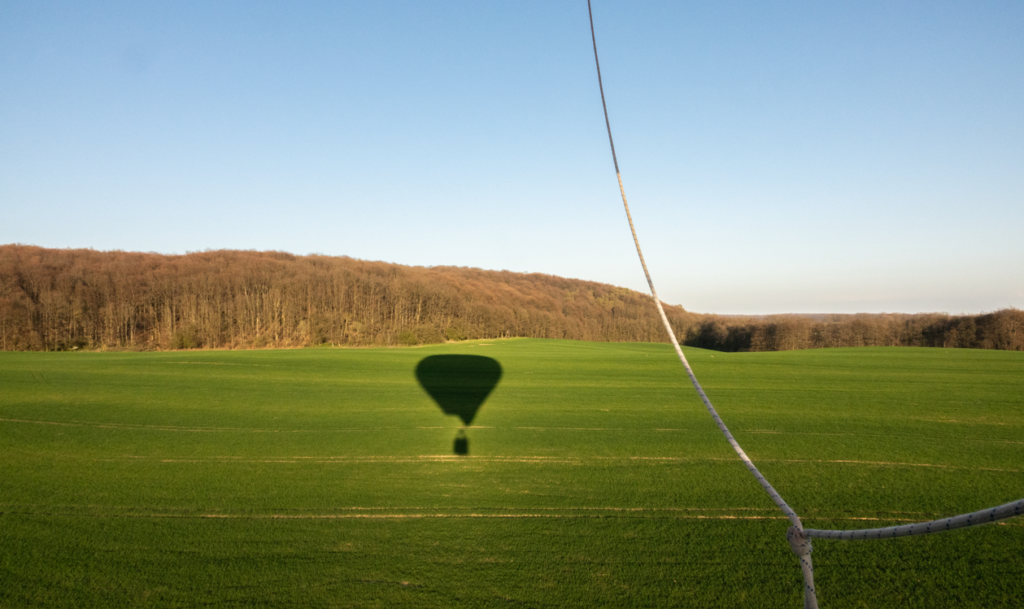
The first step is to find a suitable location for setting up the balloon and starting the flight. It should be a flat, even surface (preferably grassy), free of obstacles that could potentially damage the balloon’s envelope. If the area is sheltered from the wind — even better.
2. Preparing the balloon:
The envelope (still safely packed in a large bag) and the basket arrive on a trailer. First, the envelope must be laid out on the ground. It may seem simple, but depending on the size of the balloon, it requires some effort — and usually a bit of help from passengers who are eager to get involved. At first, the envelope is carefully unrolled in a straight line (usually directly from the trailer) and then fully stretched out on both sides. This is when the crew might ask for your assistance. All of this helps ensure that the balloon fills evenly with air.

3. Positioning the basket:
Once the envelope is properly laid out (with no folds or creases), it can finally be attached to the basket. At this stage, the basket is often tilted to the side, making it easier to connect all the straps, quick links, carabiners, and load cables. Some of these are attached to the basket’s base, while others are connected directly to the burner frame.
4. Inflating with cold and hot air:
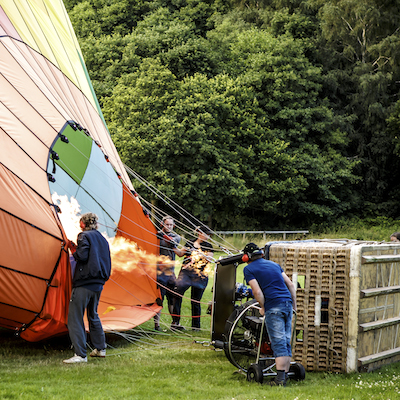
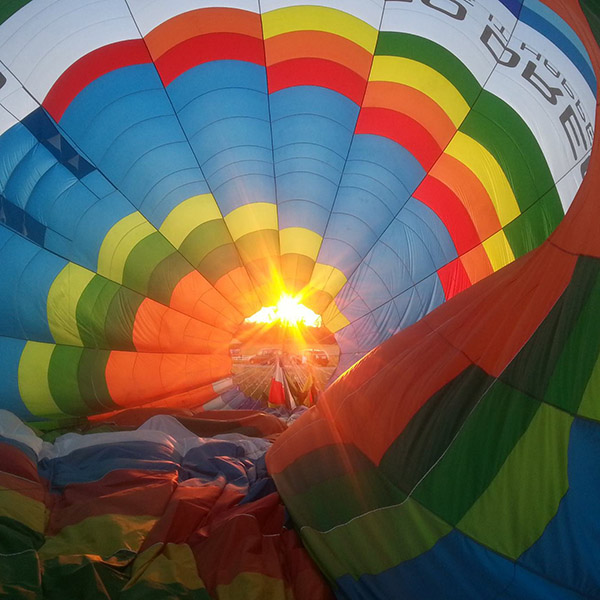
After the safety check and thorough inspection, it’s time to begin the flight. At first, a medium-sized fan blows cold air into the envelope to give the balloon its shape. As the envelope starts to fill and expand, the pilot ignites the burners and begins heating the air, causing the balloon and basket to slowly rise into an upright position. Once the balloon is fully upright, passengers can board.
5. Take-off:
The air inside the envelope heats up, becoming lighter and less dense. The balloon slowly lifts off the ground as the heated air increases its buoyant force. At this point, the pilot provides passengers with all necessary safety information, and the crew performs final pre-flight checks. This is the beginning of the flight — and your adventure!
6. Landing:
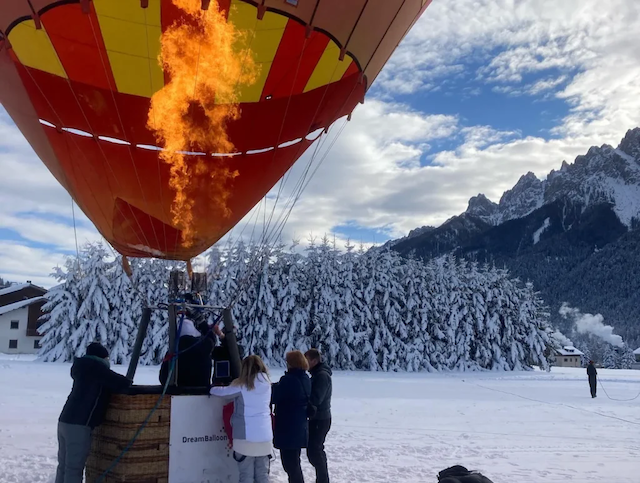
When the pilot finds a suitable landing spot, they gradually reduce the burner flame intensity to slowly decrease altitude. Opening the parachute valve reduces the risk of a hard landing, though the touchdown itself usually ends with a gentle bounce off the ground.
A safe landing requires significant skill and experience — after all, it’s the most challenging part of the flight.
See where we fly!