1. The Oldest Form of Air Transport
Hot air balloons hold a truly remarkable record — they are recognised as the first fully functional flying technology in human history. Although airplanes and helicopters dominate today, our conquest of the skies began back in 1783.
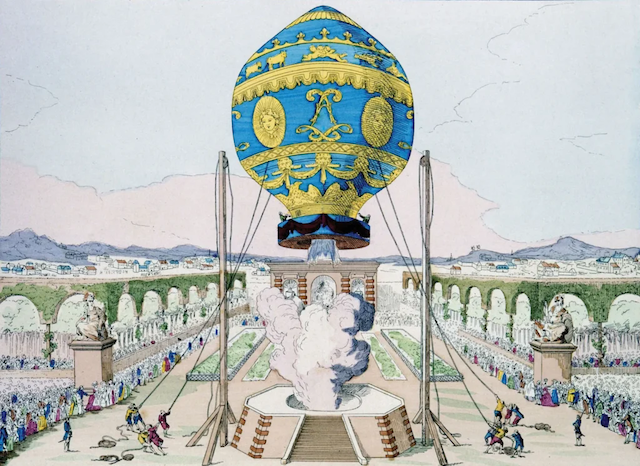
That was when French inventors Joseph and Étienne Montgolfier built a balloon made of silk and paper, which rose thanks to hot air produced by burning a mix of wool and straw. The first public demonstration took place before King Louis XVI and Queen Marie Antoinette at Versailles. It was quite the event. And fortunately, everything went according to plan.
The balloon rose to about 600 metres and travelled over 1.5 kilometres, proving that one day humans would indeed be able to conquer the skies. Just two months later, the first manned balloon flight took place — marking the beginning of an entirely new era of exploration.
Interestingly, balloons were never widely used for transportation. They served more as a solid foundation — a revolutionary idea that paved the way for greater achievements. From the very beginning, ballooning has always been about exploration, challenge, and pushing new boundaries. Nevertheless, the art of ballooning continues to capture great interest, remaining to this day a symbol of adventure and the human spirit.
Remember — with every flight, you become part of this unique and proud tradition!
2. Technology Born in China
Although the Montgolfier brothers are considered the fathers of modern ballooning, the technology of using heated air for flight is much older — dating back over 1,500 years.
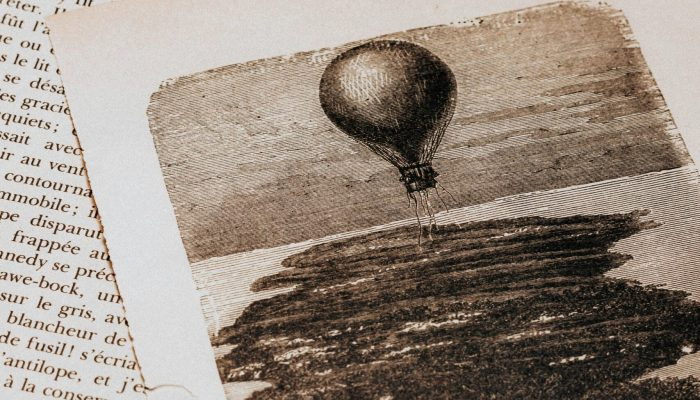
As early as the 3rd century BC in China, the brilliant military strategist Zhuge Liang created flying lanterns known as Kongming.
Już w III wieku p.n.e. w Chinach, genialny strateg wojenny Zhuge Liang stworzył latające lampiony zwane Kongming. In this case, the source of heat and hot air was a small candle. It was this candle that allowed the lantern to rise into the air. Military commanders attached encrypted messages to them, and the lanterns carried those messages across the battle lines.
Over time, they moved from the battlefield into tradition — today, thousands of such lanterns are released into the sky during festivals in China, Thailand, and Taiwan as symbols of hope, prosperity, and good fortune.
In a sense, they were prototypes of modern balloons — proof that the dream of flight has always been part of human nature.

3. A Tragic Love Story
Jean-François Pilâtre de Rozier, a renowned French scientist, was the first person to ascend into the air aboard a balloon.
On 21 November 1783, together with the Marquis d’Arlandes, he completed a historic flight over Paris. It was an incredibly significant moment in the history of aviation. Unfortunately, his passion for flying would ultimately have tragic consequences for him personally.
In 1785, during an attempt to cross the English Channel in a hybrid balloon (using both hot air and hydrogen), an explosion occurred. The balloon caught fire and crashed, making Rozier the first recorded fatality in aviation history.
4. Caught with a hand in… the basket
Not every moment of glory turns out to be so dignified. In 1785, Jean-Pierre Blanchard from France and American physician John Jeffries became the first to fly a balloon across the English Channel. It was an impressive feat — especially considering that the previous daredevil who attempted it paid for the effort with his life.
But their flight nearly ended in disaster — and with quite a spectacle at an altitude of over 900 metres…
Shortly after take-off, they realised the balloon was too heavy and began to descend rapidly over the freezing waters below. Terrified, the brave duo started throwing everything overboard — sandbags, scientific instruments… and eventually, their own clothes.
By the time they reached the French coast, the two pilots were floating gracefully above the picturesque fields — in nothing but their underwear. Nevertheless, they achieved their goal, landing near Guînes and proving that long-distance balloon travel was indeed possible — even if it came with a touch of embarrassment!

5. Champagne Landings – A High-Flying Tradition
In the 18th century, balloon pilots faced a rather unusual problem — very angry farmers. The sight of a huge, smoking balloon descending from the sky was often mistaken for an ominous sign or even an attack from above. Some terrified farmers mistook them for evil spirits and began attacking, completely destroying the poor, innocent balloons.
So how could pilots earn the trust of the frightened locals? Well, pilots back then had their own clever solution.
They began carrying bottles of champagne with them. After landing, they offered the farmers a drink as a gesture of peace — to calm their nerves, show that there was no danger, and celebrate the successful flight together.
This tradition has lasted for more than 200 years. Today, many commercial balloon flights end with a symbolic champagne toast to keep this beautiful custom alive. Some pilots even recite the traditional Balloonist’s Prayer:
(original English version)
„The winds have welcomed you with softness,
The sun has blessed you with its warm hands,
You have flown so high and so well,
That God has joined you in laughter
And set you gently back
Into the loving arms of Mother Earth.”
(free Polish translation)
„Wiatry przyjęły cię łagodnie,
Słońce otuliło ciepłymi dłońmi swymi,
Wzbiłeś się tak wysoko i tak pięknie,
Że Bóg się do ciebie uśmiechnął
I postawił cię łagodnie
W kochających ramionach Matki Ziemi.”
So next time you raise a toast after landing, remember that you’re taking part in a centuries-old tradition — one filled with peace, joy, and camaraderie!

Don’t forget about Part One — you can never have too many fun facts about ballooning and hot air balloons!