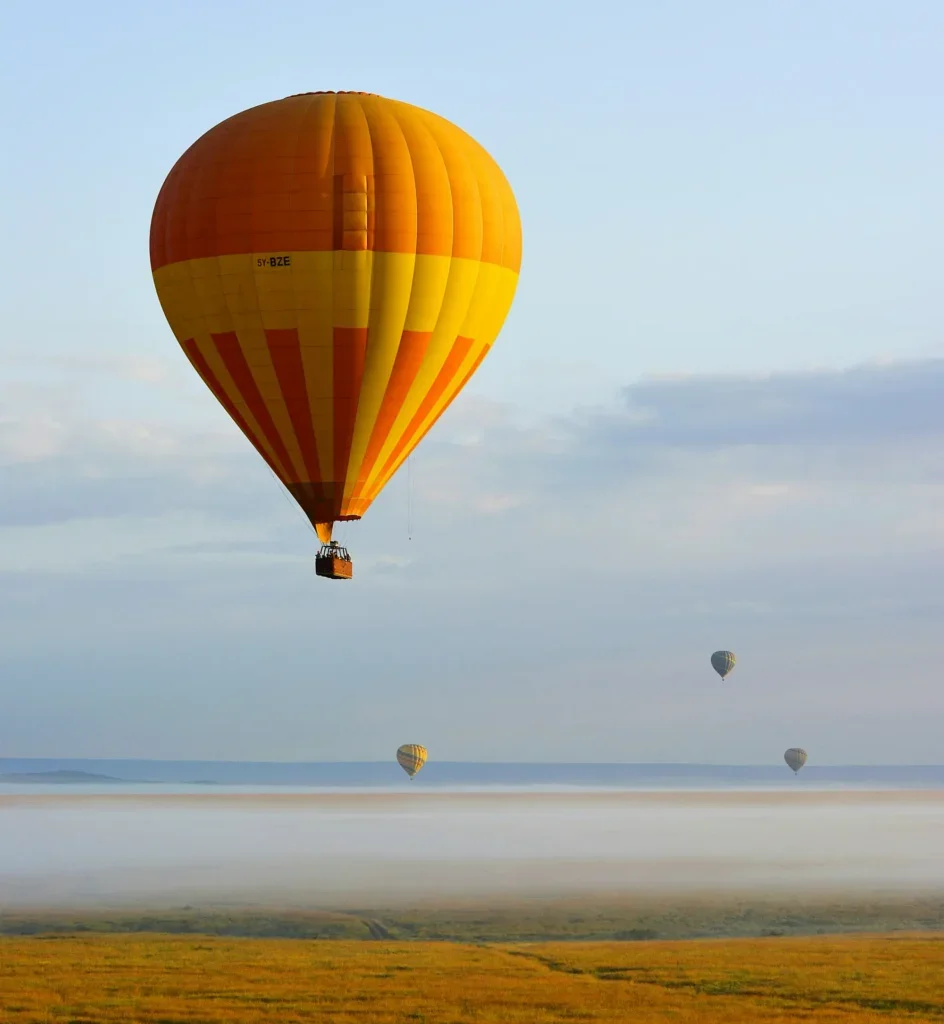
Ballooning is a relatively young sport. It’s only about 200 years old. Despite its short history, it’s a rich one — marking an important chapter in humanity’s journey to conquer the skies. What’s more, hot air balloons enjoyed only a brief period of widespread popularity. They were quickly replaced by even more groundbreaking inventions — airships and airplanes.
Nevertheless, they marked the beginning of humanity’s first true attempts to conquer the skies. Although it was an invention of great significance, balloons never became popular for everyday use. From the very beginning, they were more of a pastime for enthusiasts.
Yes, some balloons were used for scientific research or military observation, but that chapter in history was, so to speak, short-lived. They were simply too unpredictable, as so much depended on wind currents.

Competitive Ballooning
Once you fall in love with ballooning, there’s no turning back. Perhaps that’s why balloons have always attracted adventurers and explorers — those eager to push boundaries and break records. What was once meant to revolutionize travel became a passion for the few.
And that’s more or less how things stand today. There are all kinds of balloon expeditions organized to enjoy breathtaking views, yet there are still those who see ballooning as a challenge — a way to prove their skills. That’s why we’re now seeing balloons more often at competitions, festivals, and championships — not just during “commercial” flights.
But what exactly is this sport all about?
Challenges for True Daredevils
If you’re just beginning your journey into ballooning, the number of balloon festivals around the world might surprise you. It might seem like an incredibly niche form of entertainment. For many, it’s almost unheard of. But that’s far from true.
Every year, hundreds of enthusiasts gather across the globe to test their abilities. So, what does it look like in practice? Here’s where it gets interesting. Let’s get into the details.
1. Hare and Hounds
One of the most exciting challenges — Hare and Hounds — is a test of navigation and precision. One balloon, known as the “hare,” takes off first and flies a set distance before landing. The remaining participants take off afterward and must drop a weighted marker as close as possible to the hare’s landing spot, which is marked after it lands. The closer their marker lands to the target, the better their score.
- The challenge: Pilots must respond to air currents, adjust altitude to change direction, and make split-second decisions to drop the marker precisely.
- Did you know? The name comes from a traditional hunting practice — the original English term Hare and Hounds literally means “hare and hounds.” It refers to a hunt where a pack of dogs (often with riders) chases a hare or another animal. This concept was later adapted for running and orienteering races — and eventually brought to the skies.
2. Key Grab
Imagine flying a massive balloon toward a tall pole with a small ring or key at the top — and trying to grab it while hovering tens of meters above the ground. That’s exactly what this challenge is about.
- The challenge: Pilots must precisely judge altitude to get close enough to the pole while maintaining full control of the balloon. One wrong move — and the chance to grab the key is gone!
- Did you know? This challenge originates from aerial acrobatics, where pilots performed precise maneuvers to catch various objects midair. That idea was later adapted to ballooning and turned into an official test of skill and control.

3. The Elbow
Despite its unusual name, “The Elbow” is an exciting and unique challenge that tests a pilot’s navigation skills through sharp turns while maintaining full control of the balloon. In this event, pilots must perform a series of sharp, controlled turns around designated points with precision. The goal is to complete the course as quickly as possible while staying within the marked path — no cutting corners.
- The challenge: Pilots must carefully control altitude and use air currents skillfully to make precise turns without losing speed or control.** It’s not just about maneuvering — they must also stay on course and avoid crossing the boundary markers. One turn that’s too sharp or too wide can cost valuable seconds.
- Did you know? The “Elbow” challenge is inspired by slalom-style racing found in other air sports — but adapted for the slower, more graceful movement of balloons. The idea came about because balloon pilots wanted to test their precision flying — think of it like driving a car along an extremely winding mountain road.

4. STAR
This is one of the most thrilling challenges, requiring precise control of the balloon in an open 3D airspace. Pilots must navigate their balloons as close as possible to a designated point in three-dimensional space.
- The challenge: Since a balloon has no traditional steering system, pilots must rely on air currents and altitude changes to reach a specific — and invisible — point in the sky.**
- Did you know? The concept of “STAR” simply comes from looking up at the sky and aiming for a distant point. It’s an exciting test of control and timing that turns a balloon flight into a thrilling race.
5. Minimum Distance Task (MDT)
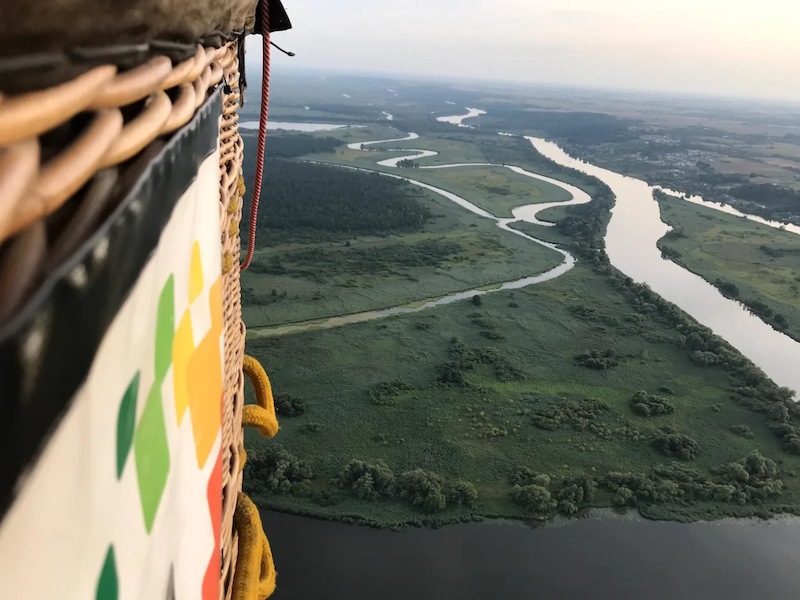
In most competitions, pilots aim to cover the greatest possible distance. But as the name suggests, that’s not the goal in MDT — the Minimum Distance Task. Here, pilots must take off from a single location and land as close as possible to the starting point within a set time.
- The challenge: Because balloons rely entirely on air currents, staying near one spot is far more difficult than it seems.** Pilots must master small altitude adjustments and use shifting wind directions to make their way back to the starting point.
- Did you know? This event is inspired by real-life flying — maintaining position in changing weather conditions is no easy feat. In the past, pilots who could stay nearly stationary were considered masters — they had to understand wind systems and control their balloon perfectly to avoid drifting too far.
Nothing easy about it
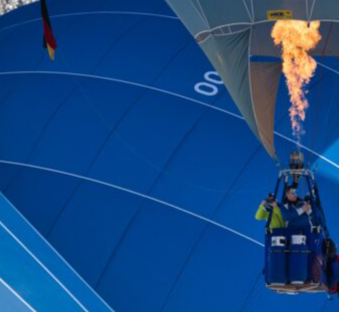
These are just a few examples — there are plenty of other fascinating challenges out there. These events are always great fun and full of excitement — but don’t be fooled, they’re called “challenges” for a reason. Most of them may look easy — especially from the ground — but in reality, they demand a lot of skill and a little bit of luck.