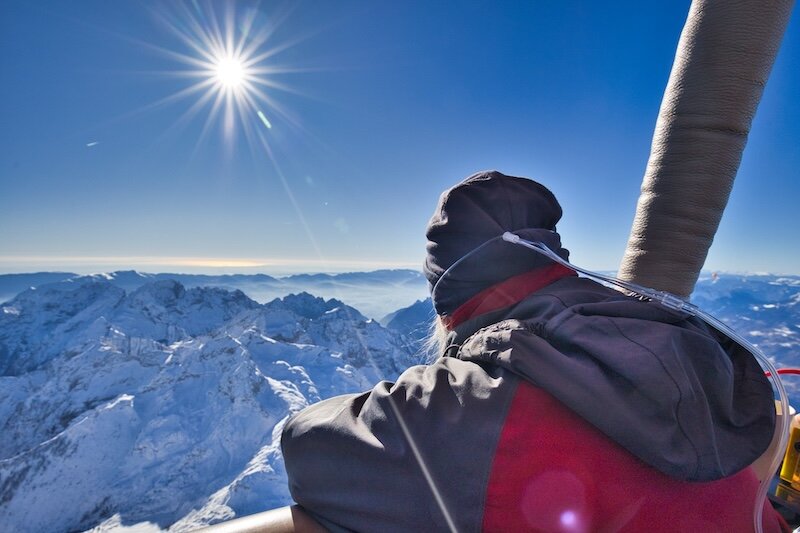
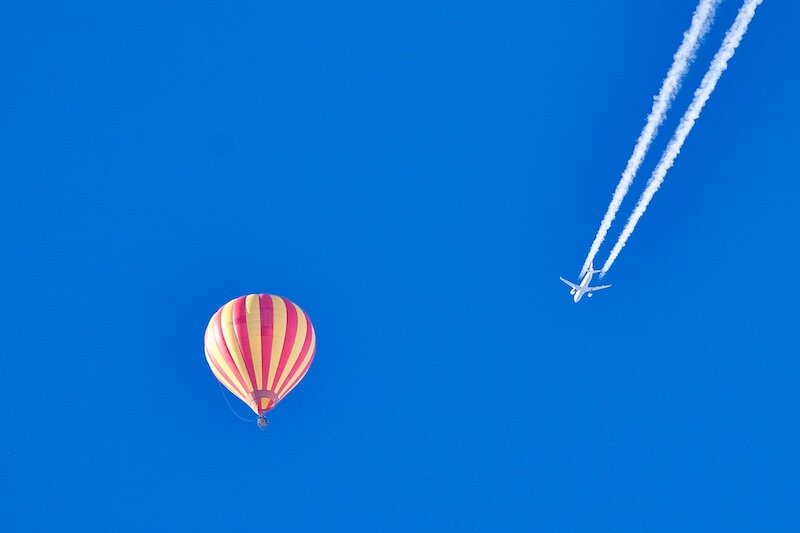
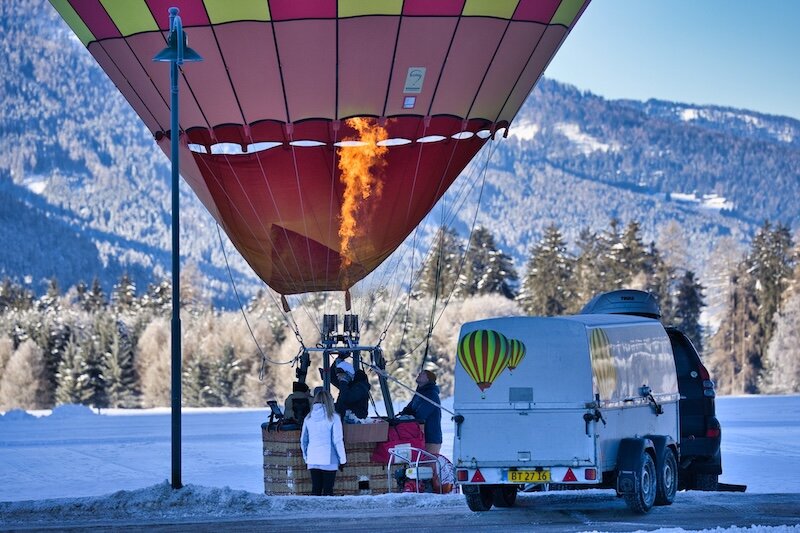
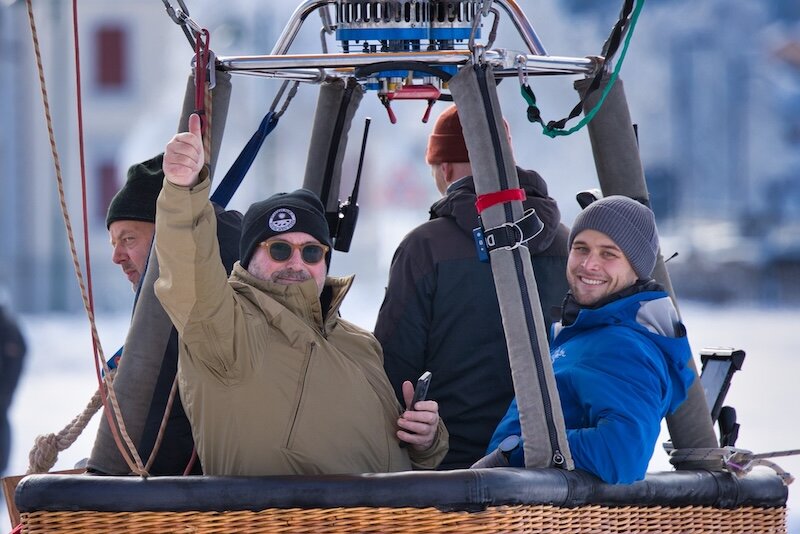
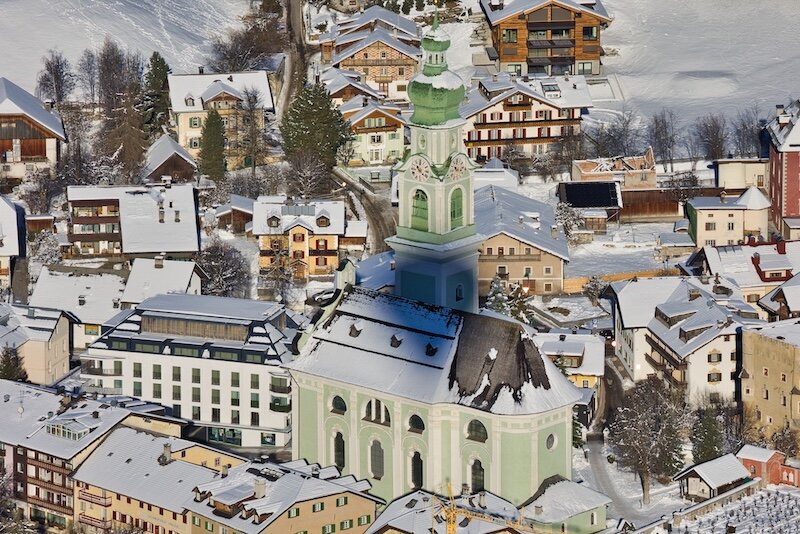
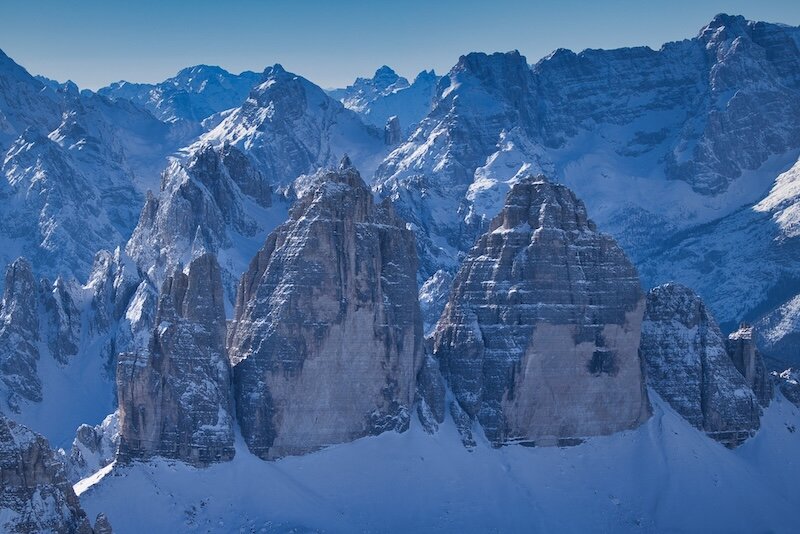
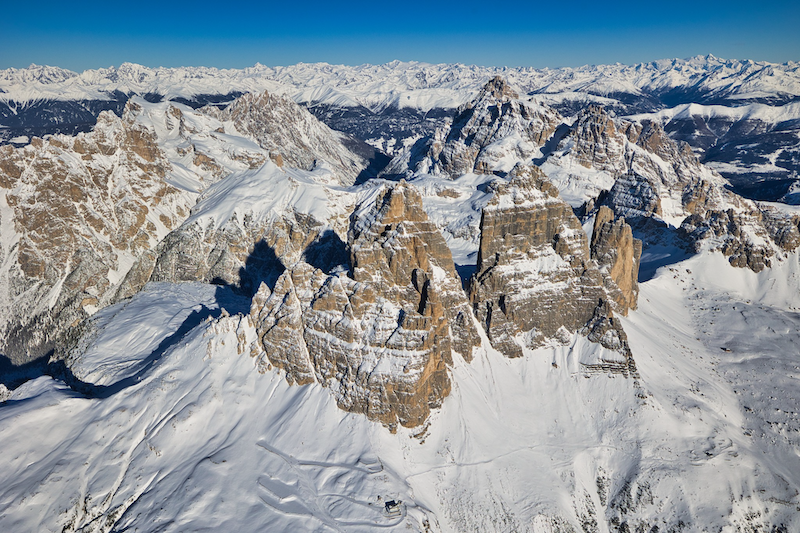
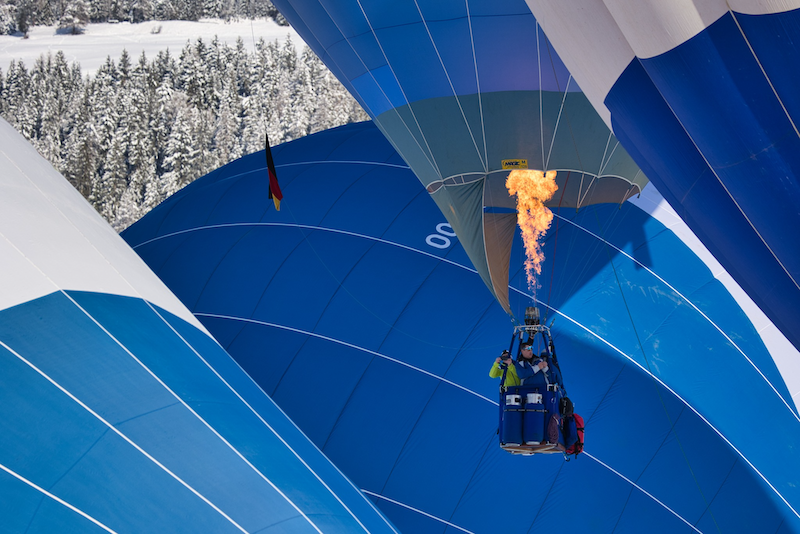
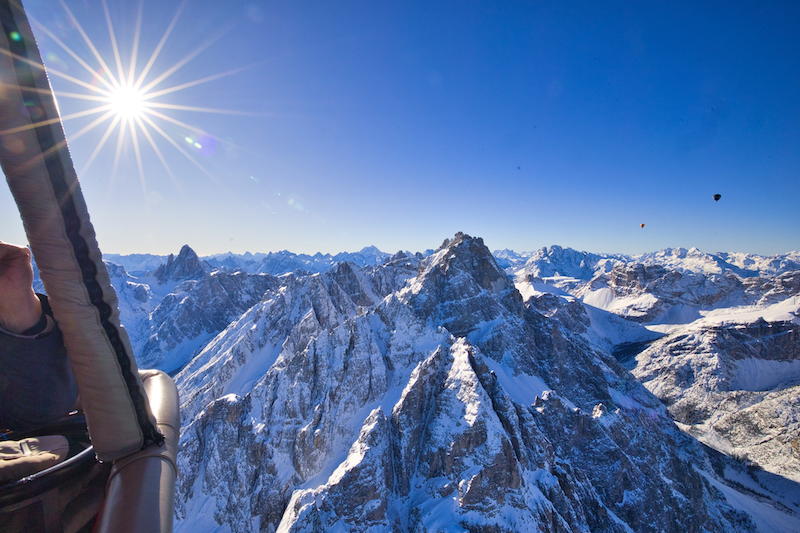
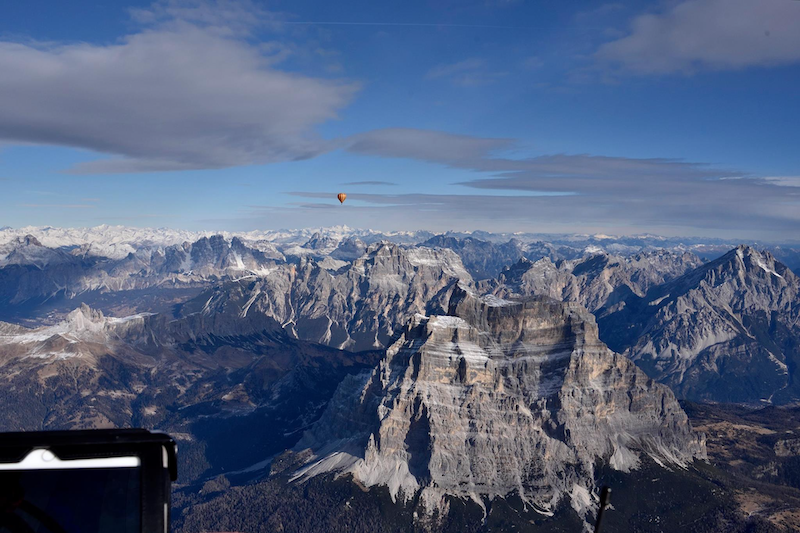
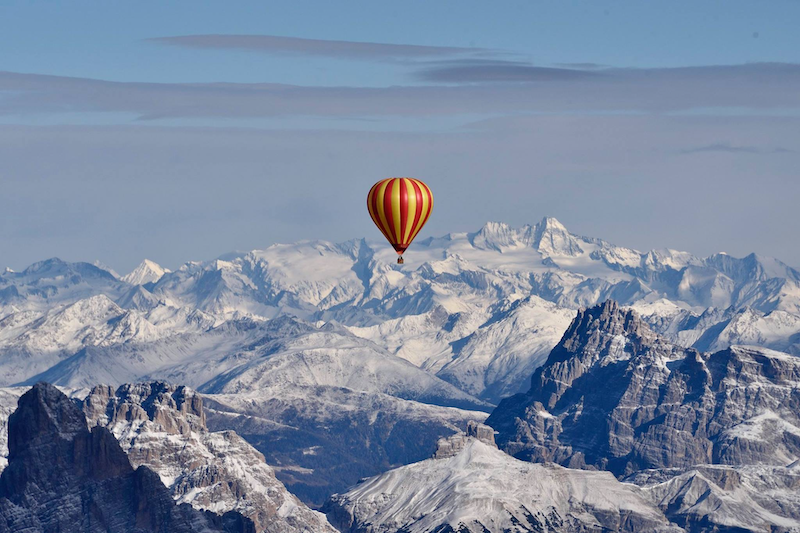
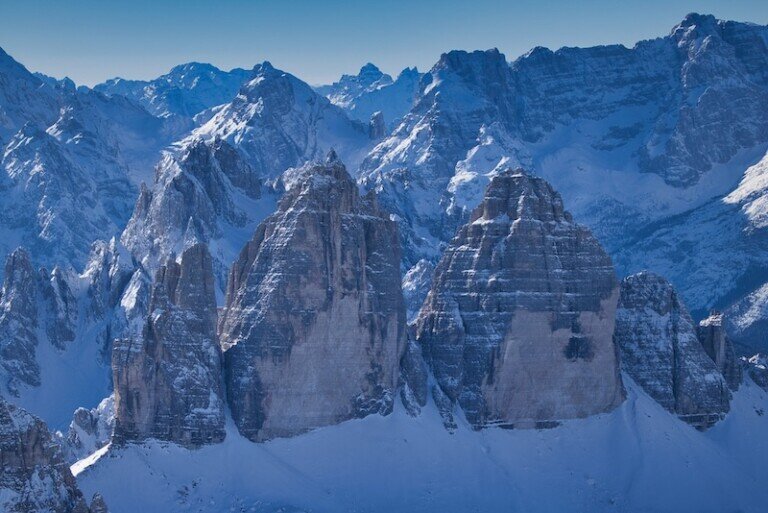
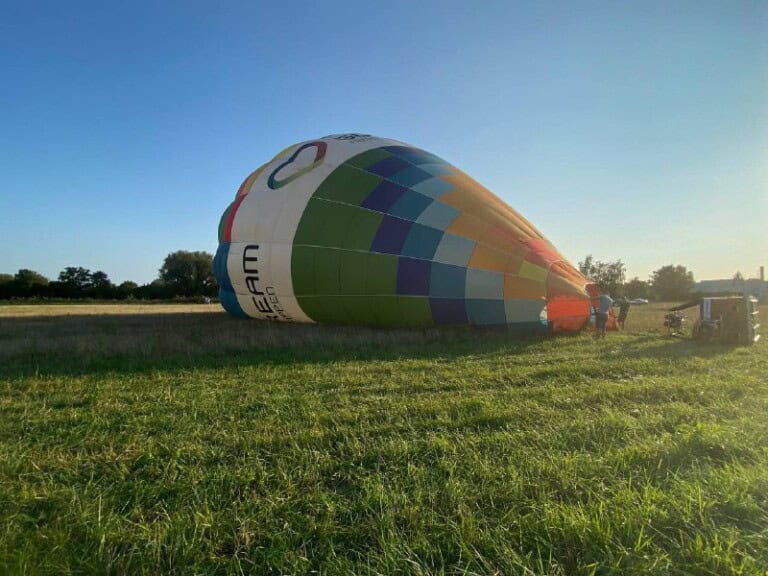
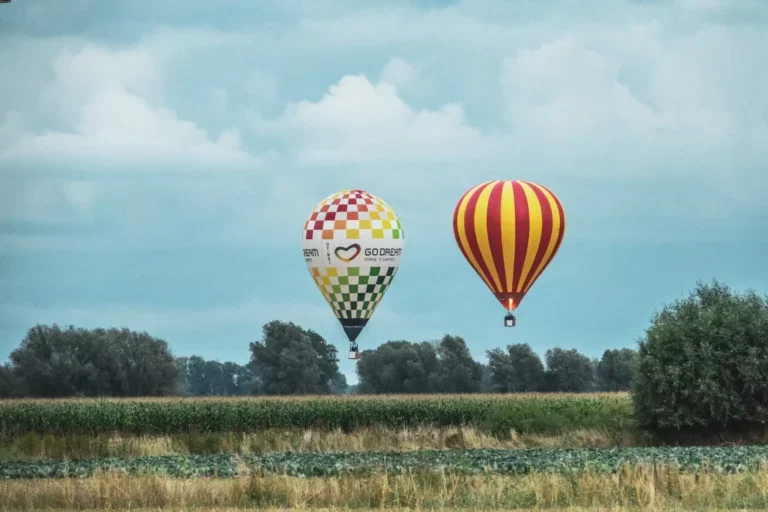
At the beginning of January this year, we had a wonderful opportunity to take our balloons to the Alps and fly among the mountains. The Dolomites offer breathtaking views and stunning landscapes, but at the same time, they’re a rather demanding area for hot air balloon flights.
The Alps vs. the Tatras – A Different Kind of Flight
The Alps, thanks to their vast area, allow flights in virtually any direction — something that sets them apart from many other mountain ranges, including the Tatras.
Even if the wind direction in the Alps isn’t ideal, we can always adjust our takeoff point to match it and ensure suitable potential landing spots.
The Tatras, on the other hand, can only be crossed from south to north or north to south. That usually means waiting for the perfect wind conditions, which makes it quite difficult to catch the right moment for a flight. We’ve crossed all of Poland several times to attempt a flight over the Tatras — but each time, despite beautiful weather, the winds simply weren’t right.
Views and Landing
The most spectacular flights are those over the highest and most rugged parts of the mountains. Our flight took us over the Dolomites.
There are often conditions that allow for takeoff right in the heart of the mountains, while the landing can take place, for example, in the warm climate zone of Italy! For instance, we’ve landed near Venice before.
For slightly shorter flights, one of the many wide valleys between the Alpine peaks can serve as a landing site — for example, the Belluno Valley, where we happened to land as well.
Challenges and Preparation
Regardless of how long or how far you plan to fly, it’s essential to reach a proper altitude — over 12,000 feet (around 3.7 km). That, in turn, comes with specific equipment requirements. For example, every flight is equipped with an oxygen system (mask and tank).
The balloon itself also undergoes preparation — we pressurize the tanks with nitrogen and ensure enough gas for the planned flight time and distance, plus a safety margin. For that reason, the number of passengers is reduced — to carry more fuel and limit the envelope’s load.
So what makes this type of flight different from a “regular” passenger flight — say, around Szczecin or the Tri-City area?
First of all, Alpine flights are planned to last at least four hours. There are no intermediate landings, and you fly over the highest peaks — making it an adventure for long-distance enthusiasts with strong nerves.
12,000 feet above the Alps in January — four hours in open air. How do we handle the cold?
Contrary to what you might think, pilots and passengers don’t turn into icicles during the flight 😊
For instance, on one flight the temperature at takeoff was -5°C. At an altitude of 4,000 meters — where we spent almost four hours — it dropped to -20°C.
However, it’s important to remember that the sun at that altitude is extremely strong and significantly affects how cold it feels. Also, while standing on the ground we feel the wind — but when flying with it, at the same speed and direction, we don’t.
That’s why, if we fly over a mountain peak where someone is standing, it will feel much colder for them — they’re exposed to the wind, which we no longer feel.
Are such flights dangerous?
Flying over high mountain ranges certainly requires more preparation, pilot experience, and a fair amount of humility. Nevertheless, when performed carefully and “by the book,” such flights are still considered relatively safe adventures.
Pilots undertaking such flights must demonstrate experience, solid knowledge, and cool-headedness. The varied mountain terrain can create unique flying conditions — for instance, turbulence.
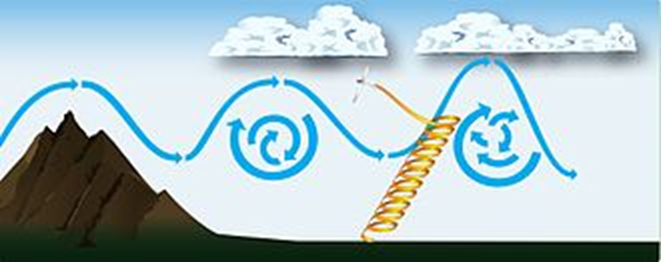
Turbulence in a balloon and an airplane are two very different experiences. In the mountains, turbulence can occur when flying at high speed over the point where a high mountain range ends. In such a situation, when the wind suddenly weakens, the air tends to “curl” instead of flowing straight ahead.
While in a balloon during turbulence, you can feel the wind coming from all directions. The balloon begins to sway and can tilt up to 30 degrees. At that point, when altitude starts to drop, heating the air inside the envelope with the burners seems ineffective — in reality, it’s just heating much more slowly, cooled constantly by the numerous air currents surrounding it. It’s in such moments that a pilot must remain calm and composed.
Below is an illustration showing how air can behave after passing over a high mountain range:
Below is a diagram showing the formation of a rotor, with the hazardous landing zone marked:
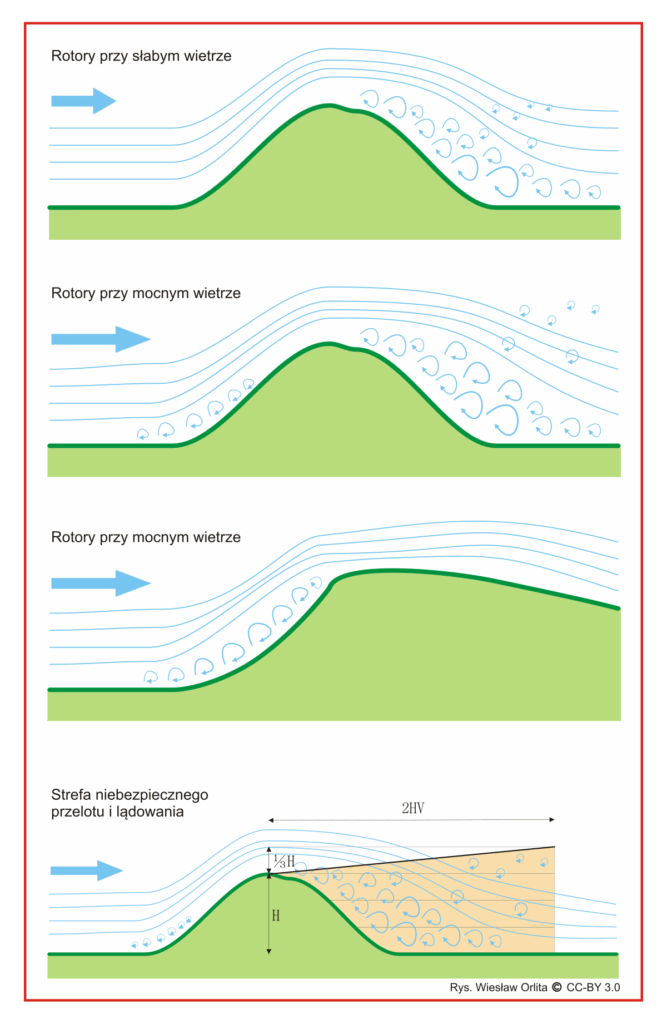
Source: https://pl.wikipedia.org/wiki/Rotor_(meteorologia)
Nevertheless, these are exactly the kinds of situations pilots are trained to handle 😊
In summary…
Balloon flights over the Alps are extraordinarily beautiful — from above, we saw the Adriatic Sea, Venice, the Croatian coast, Slovenia, and parts of Italy. These flights were marked by almost limitless visibility.
Even the ground crew following the balloon has their share of excitement — instead of highways like most travelers use in the region, they drive along narrow mountain roads, sometimes passing almost over the peaks themselves.
For those considering a slightly more thrilling experience, we wholeheartedly recommend a balloon flight over the Alps. There are companies in the area offering commercial flights — and we can organize such an adventure for you as well.